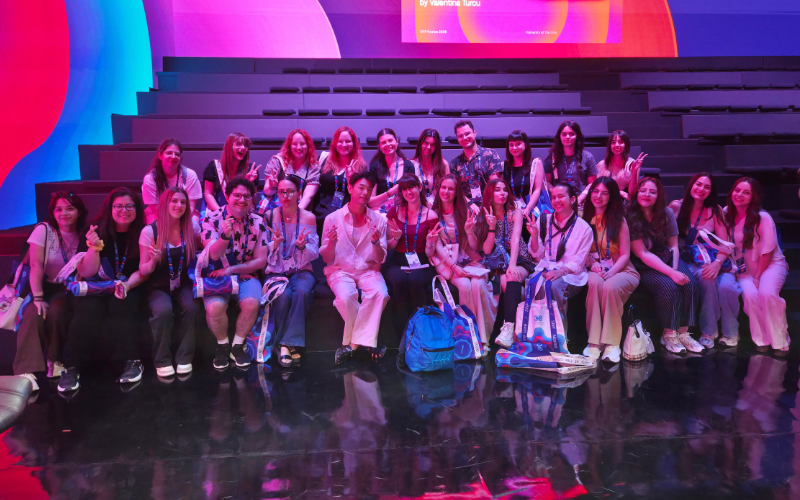
“Korean Culture Day – Korean Food & Dining Culture” took place on April 3 at the Foreign Language Teaching Center in Athens, organized by the Embassy of the Republic of Korea to the Hellenic Republic. This year’s event invited participants to explore Korean culinary traditions and to connect with one another, following the success of the previous years.
As I entered the center’s one of the largest amphitheaters, more than 60 students and Korean culture enthusiasts were gathering with curiosity and excitement for an interactive experience combining education and hands-on activities. We were first introduced to Korean dining culture through a presentation, followed by creative workshops and traditional games that allowed us to engage directly with the things we had learned.
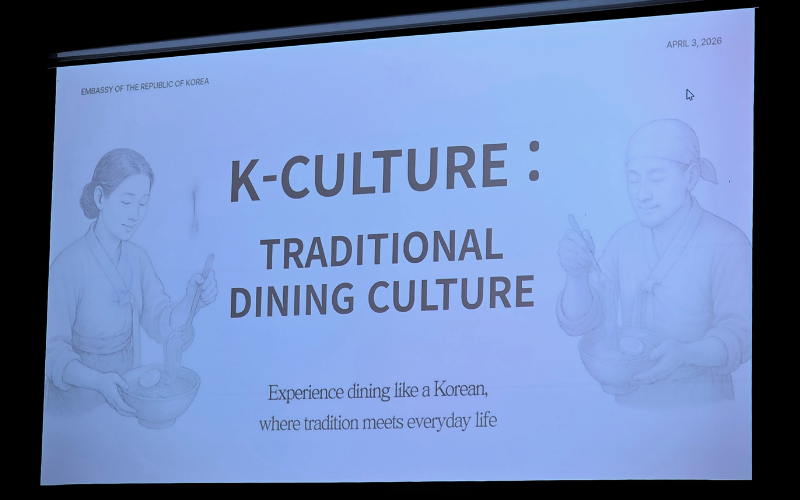
Ms. Miran Yang (양미란) welcomed attendees on behalf of the embassy and led a presentation titled “K-culture: Traditional Dining Culture – Experience Dining Like a Korean, Where Tradition Meets Everyday Life”. The presentation covered key aspects of Korean dining, including table composition, typical table setting, expressions used during meals, etiquette, the evolution of dining customs as well as drinking etiquette.
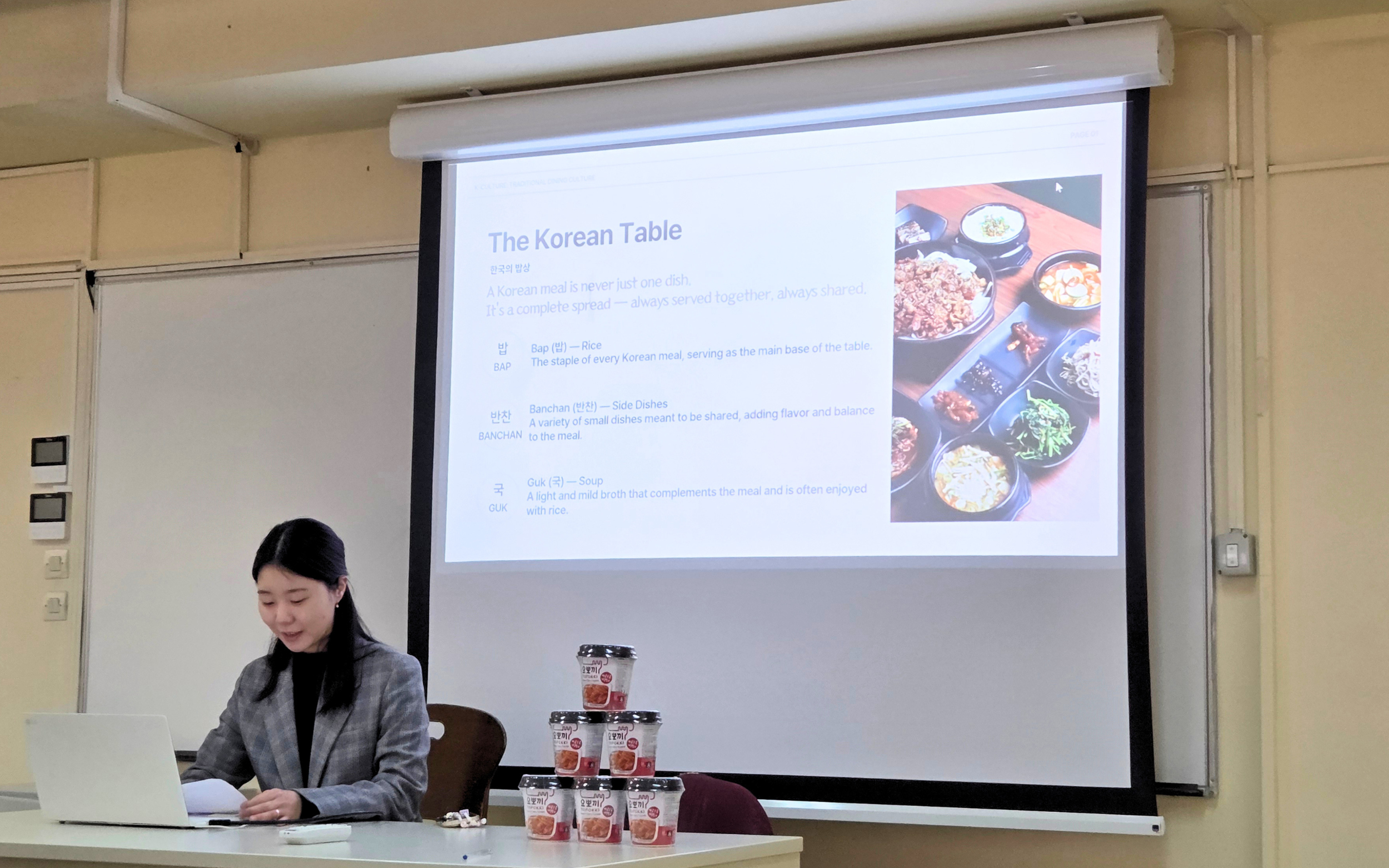
One of the most interesting parts of the presentation was the explanation that a Korean meal is not centered on a single dish but consists of a variety of elements served together and shared. These typically include rice (밥) as the staple, side dishes (반찬) offering flavor and balance, soup (국), stew (찌개), and a set of metal spoon and chopsticks. Drawing a parallel with Greek culture, we were shown how both traditions emphasize communal dining and shared dishes, creating a familiar sense of connection.
We were also introduced the structure of a traditional table setting, where rice and soup are served individually – rice placed on the left and soup on the right – while shared side dishes are arranged in the center. Utensils are placed on the far-right side of the setting. We were also taught common dining expressions such as “잘 먹겠습니다” before starting a meal and “잘 먹었습니다” after finishing, both reflecting gratitude and appreciation.
Dining etiquette drew particular attention from the audience. Participants listened carefully while learning about the important of respecting elders, as the eldest person begins the meal first. Proper utensil use, maintaining bowls on the table while eating and avoiding certain gestures – such as sticking utensils upright into rice – were also highlighted. The presentation further explored how traditional norms of quiet dining have evolved in modern Korea, where meals today also serve as opportunities for social interaction, while still maintaining respect in formal settings. Drinking etiquette was also discussed, emphasizing the importance of pouring drinks for others, especially elders, using both hands, when receiving a drink and slightly turning one’s head away when drinking in their presence.
The session concluded with an interactive quiz, where participants tested their knowledge and received Korean snacks as rewards, such as yopokki (요뽀끼), adding an element of fun to the learning experience.
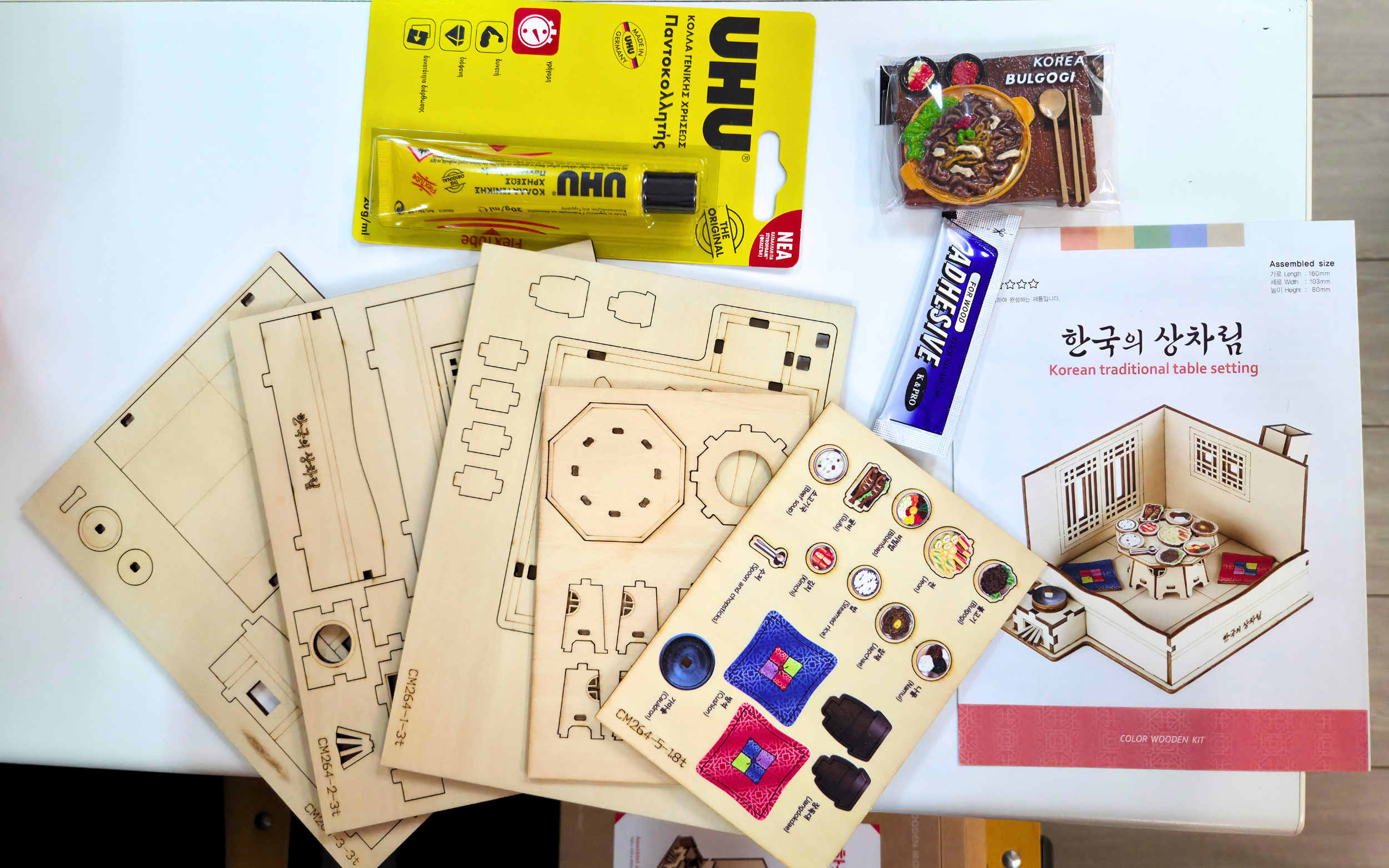
Following the presentation, we took part in a hands-on activity, assembling a DIY wooden kit to recreate a traditional Korean table setting (한국의 상차림). The process encouraged focus and creativity, while reinforcing the concepts introduced earlier. Each one of us left with a decorative piece reflecting Korean dining culture.
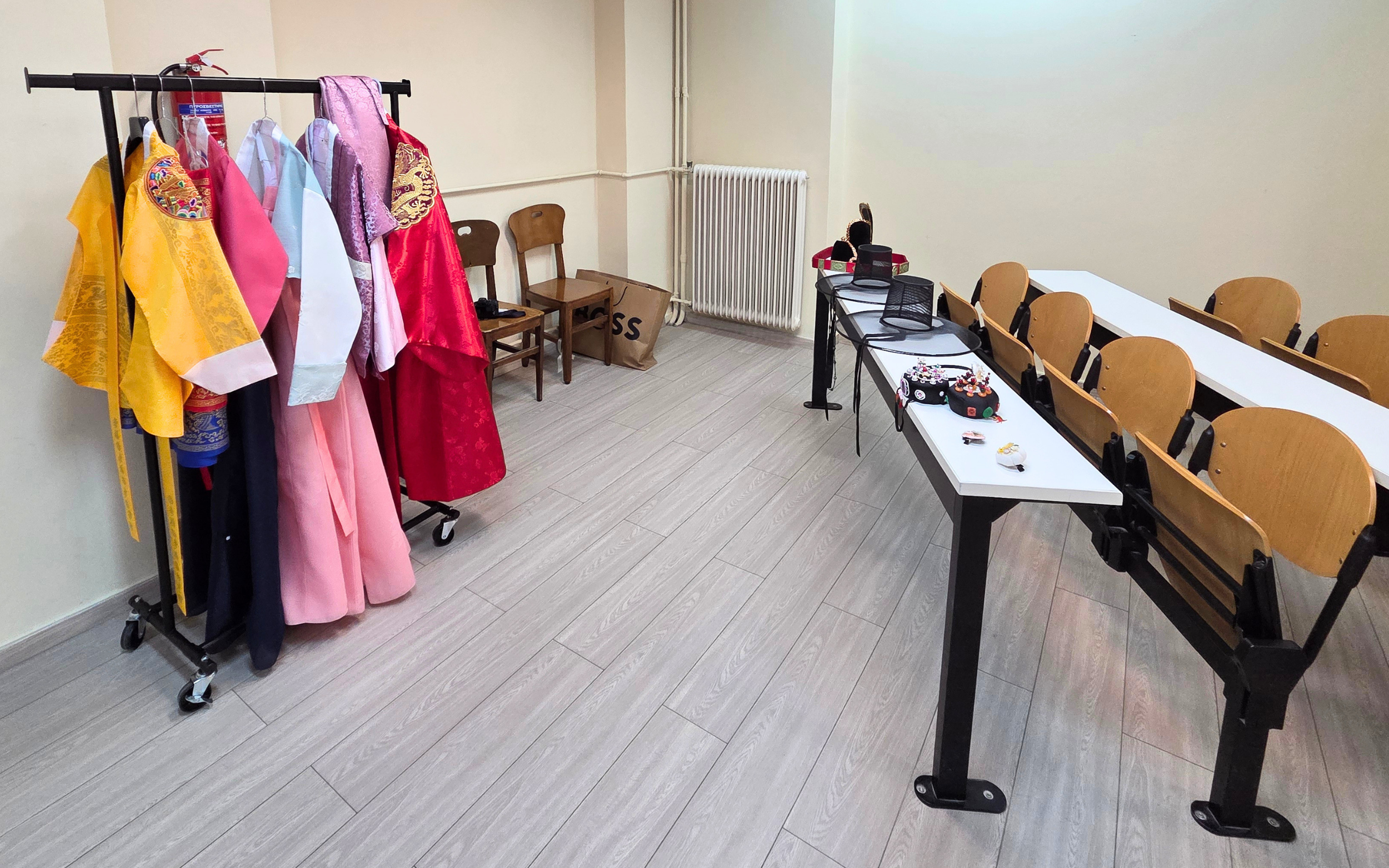
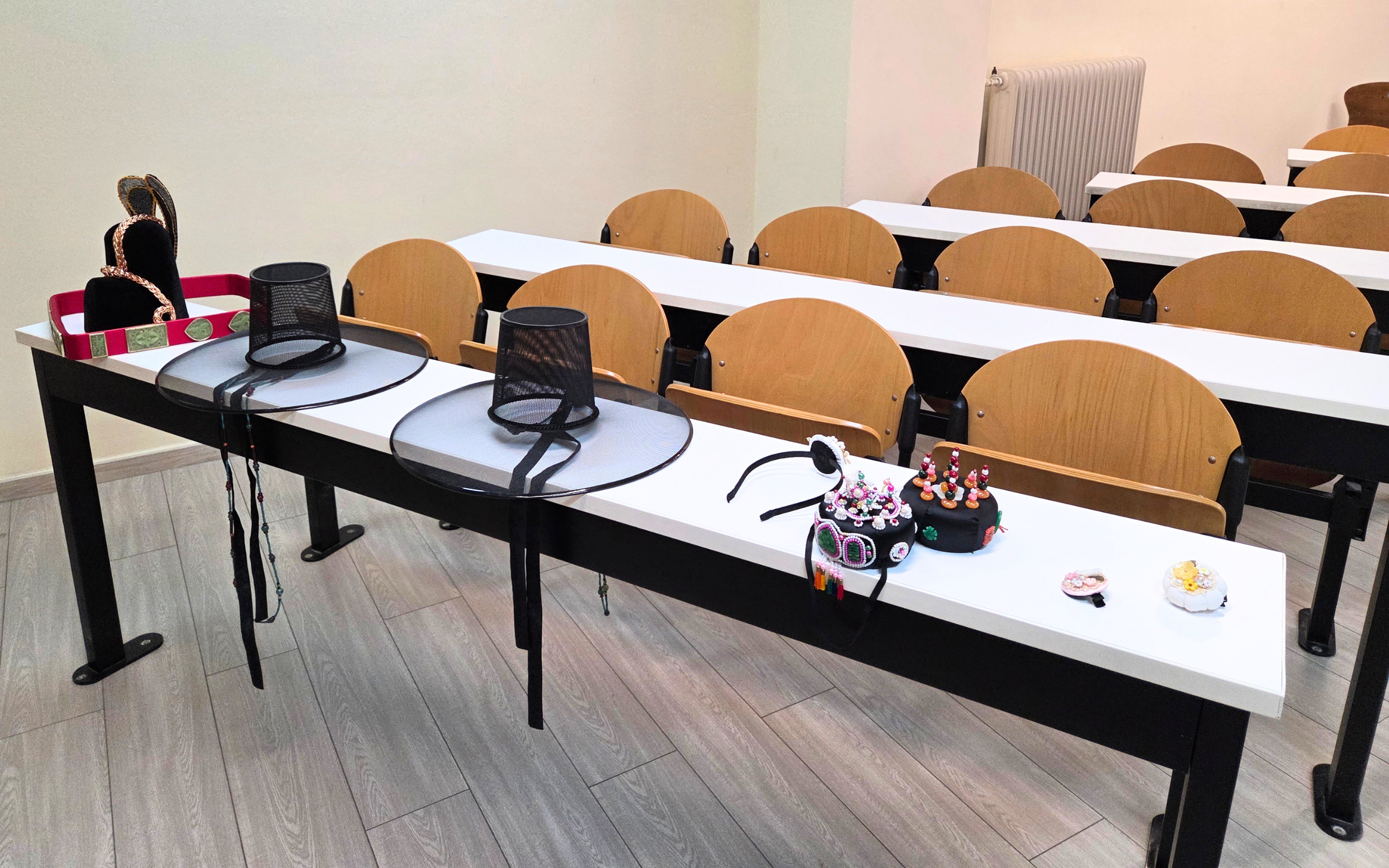
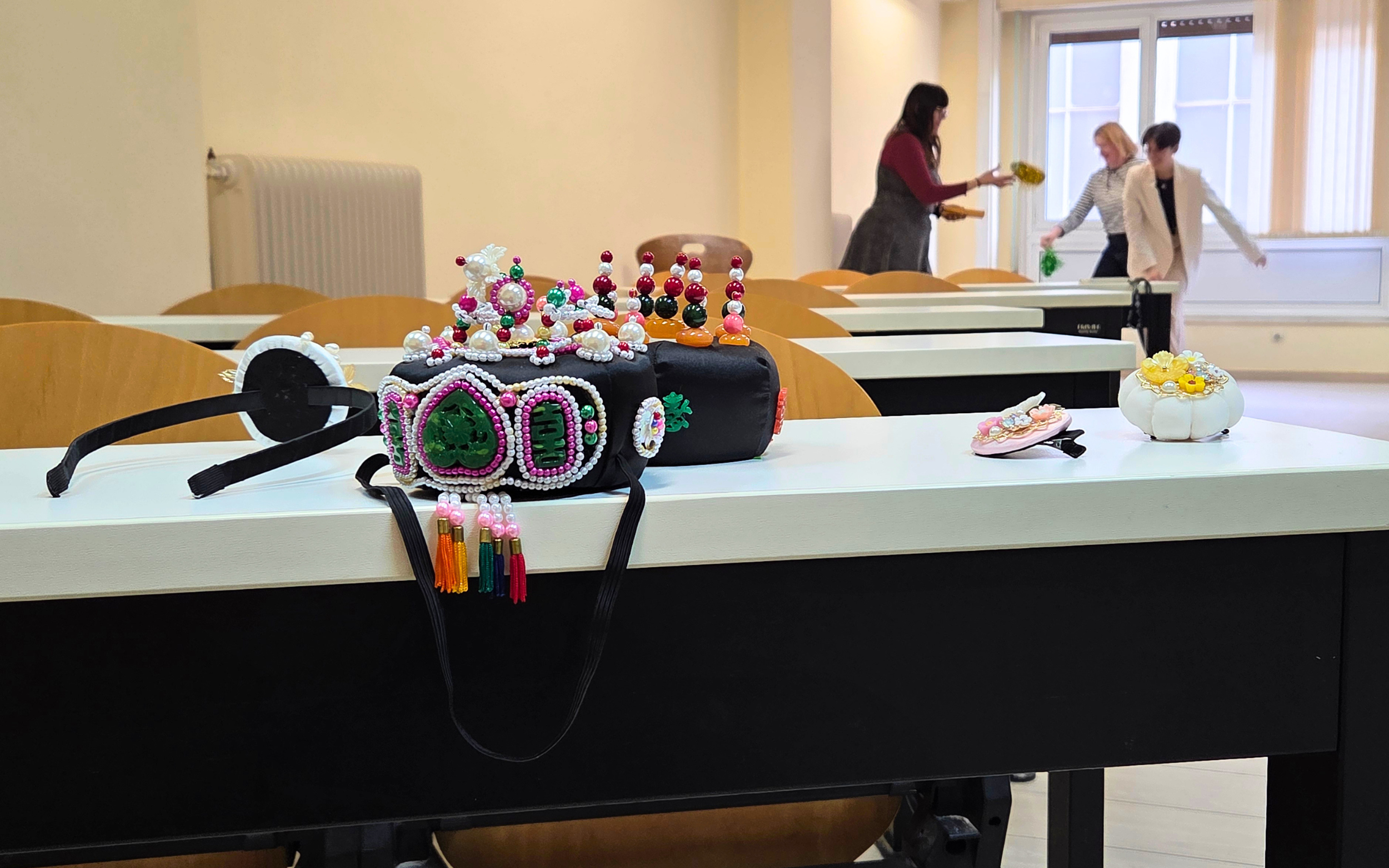
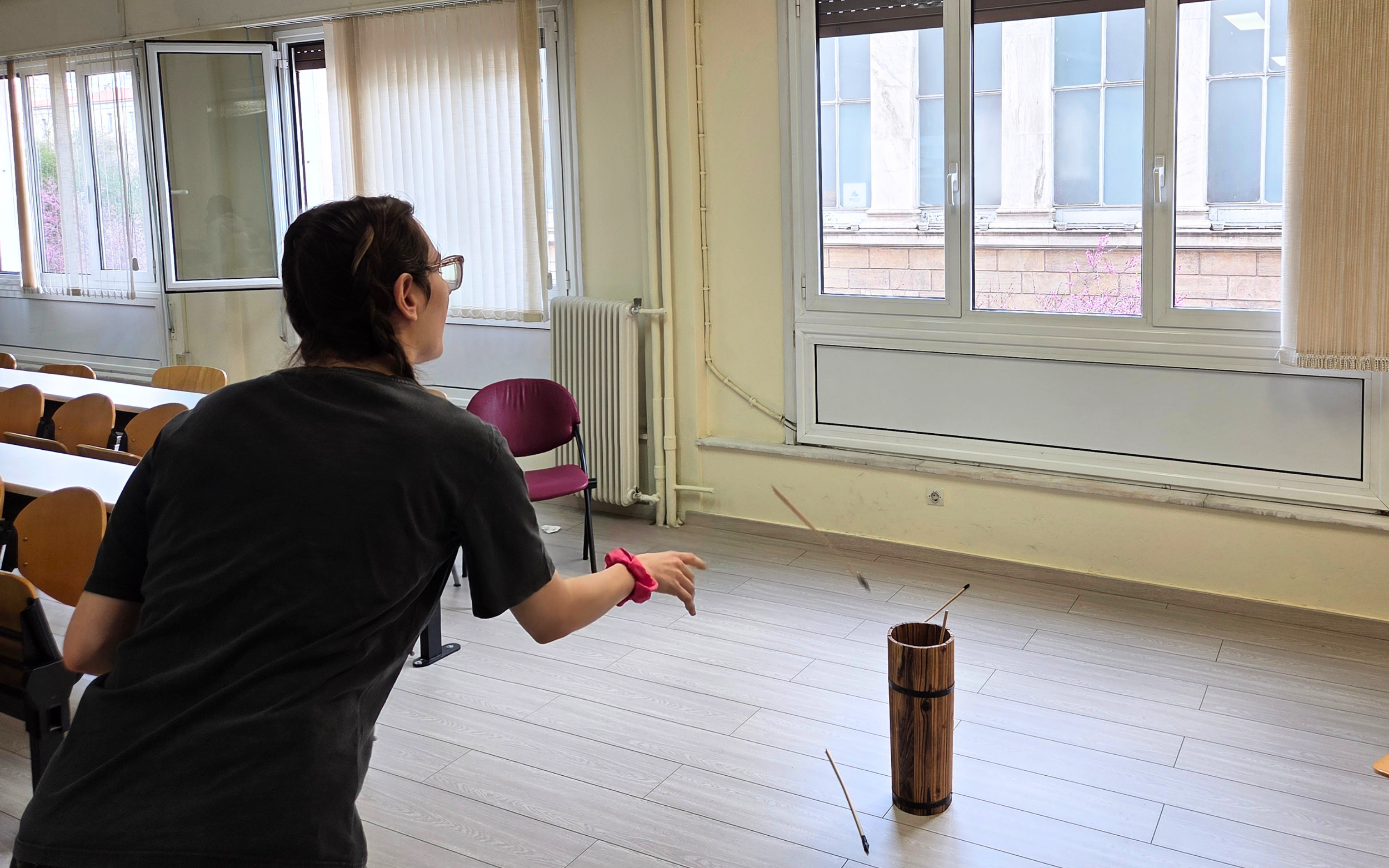
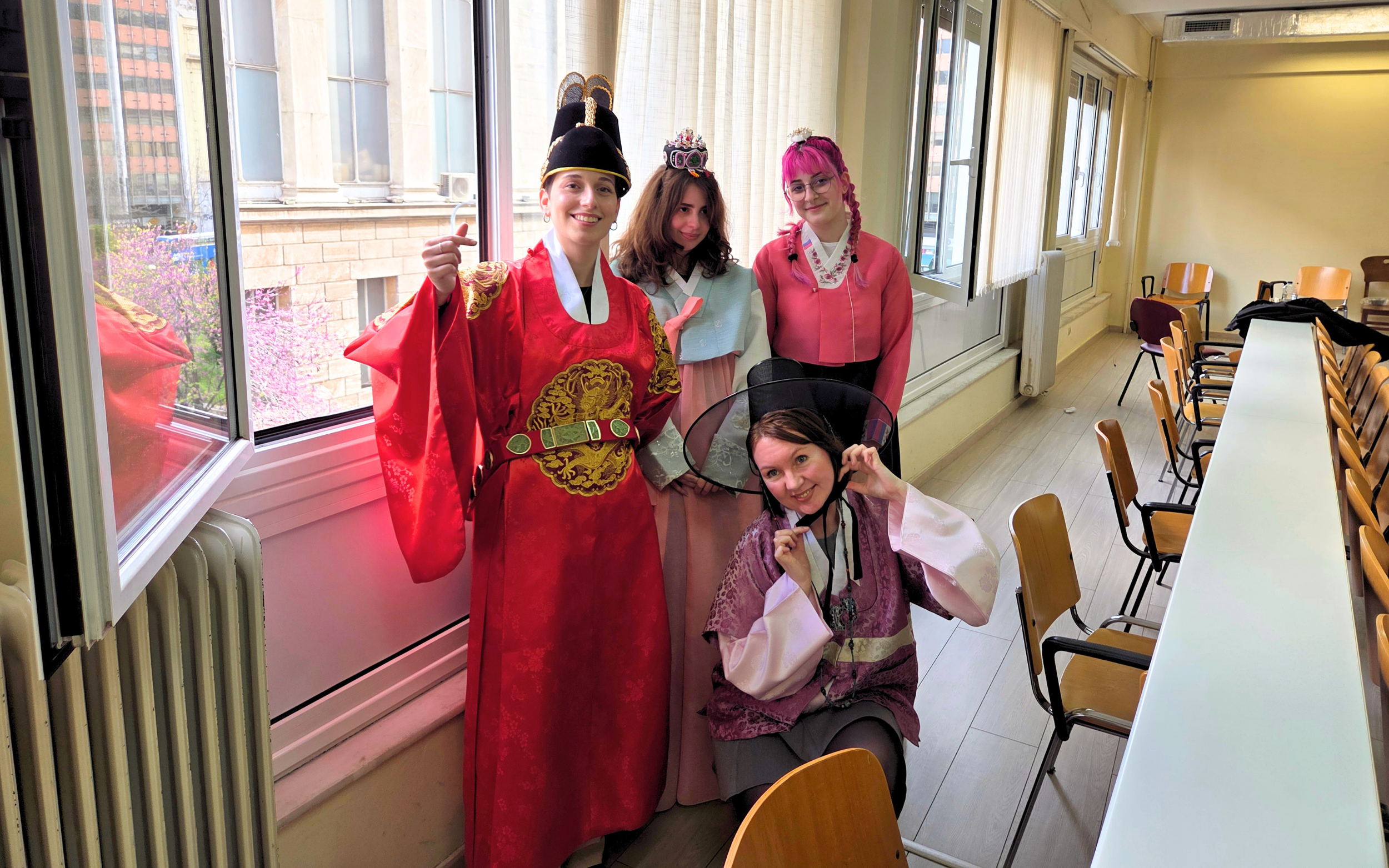
The event continued with opportunities to try on traditional Korean clothing and accessories, allowing participants to immerse themselves further in the cultural experience. A variety of traditional games were also available, including Tuho (투호) and Jegichagi (제기차기). The ones who succeeded in the challenges were awarded small themed gifts.